EXPLORE THE ARCHIVE
Search the photographed devices and compare their model details and evidence limitations.
Open the device explorer →Home monitors,
under the lens.
Method, up front
These picks come from independent clinical-validation lists read directly on September 25, 2026 — primarily the AMA's U.S. Blood Pressure Validated Device Listing (validatebp.org), read via two brand-filtered print renders. We did not rely on manufacturer accuracy claims, "clinically validated" box copy, or FDA 510(k) clearance alone — none of which independently proves a device measures accurately. The STRIDE BP and BIHS lists were unreachable on our research date (repeated server errors), so we claim nothing about them. The supplied research records the listed models below, with an unresolved A&D variant mismatch. A related family name or photograph is not exact-model validation evidence. Asking prices are dated observations from a product catalog on September 25, 2026 — they are not live prices and not completed sales.
How the lists work, what we read, and what we couldn't verify are documented in full on the methodology page.
Our picks
Omron 10 Series Wireless (HEM-7320)
Who it's for: Someone who wants a mainstream, widely recommended home upper-arm monitor with a long community track record.
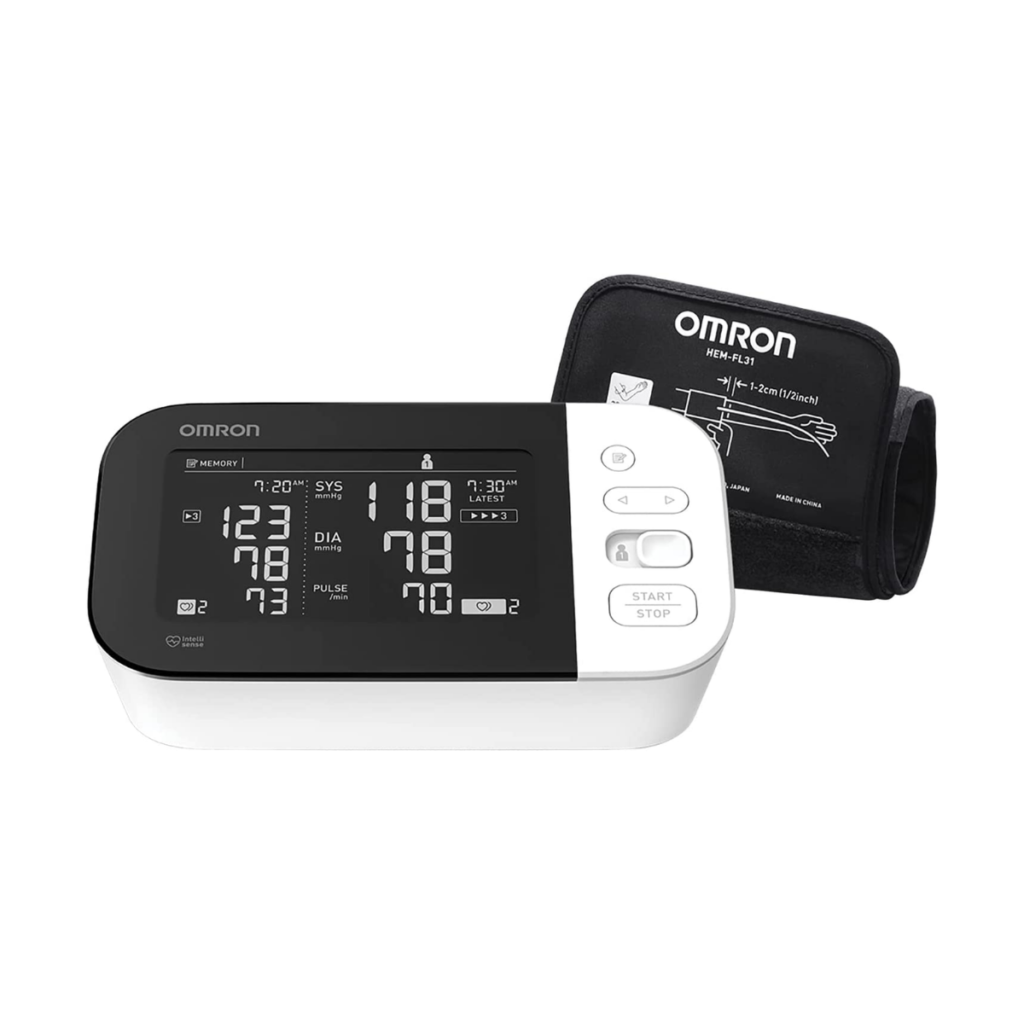
Validation status: Listed on the VDL as "10 Series® Wireless (HEM-7320)," home use, general-adult population, validated per ANSI/AAMI/ISO 81060-2:2009. The VDL also lists this model for pregnant populations. Listed cuff range: adult 22–42 cm; VDL price band $$$.
Cuff-size note: The listed 22–42 cm range covers most adults, but "most" is not "all." Measure your arm before buying (see our beginner guide) — a too-small cuff can produce falsely high readings, and cuffs that stretch one range across many arm sizes drew repeated community skepticism.
Community-reported strengths: The 10 Series name recurs across community recommendations for upper-arm Omron models, including clinic trust rituals: people bring their monitor to an appointment and compare it against office equipment. Multi-user memory models appeal to couples sharing one device.
Community-reported complaints: The usual Omron-family issues — occasional Bluetooth pairing failures and app-sync friction — appear across Omron upper-arm models in aggregated reviews. Error aborts from movement during inflation are a designed behavior, not a defect, but they frustrate first-time users.
Asking price: No asking price was captured for this model in our research pass (2026-09-25).
Omron Evolv (BP7000)
Who it's for: Someone who wants a portable, tubeless monitor — the cuff and monitor are one unit, so there's no tangle of tubing to set up each time.
Validation status: Listed on the VDL as "Evolv® Wireless Upper Arm Blood Pressure Monitor," home use, validated per ANSI/AAMI/ISO 81060-2:2013. Listed cuff range: adult 22–42 cm; VDL price band $$$. Also listed for pregnant populations.
Cuff-size note: Same 22–42 cm listed range as the 10 Series — measure your arm; wide-range cuffs drew the "how can one cuff fit everyone" complaint in community discussion.
Community-reported strengths: Gentle, relatively quiet inflation. Strong brand trust because clinics visibly use Omron equipment. Named among the most-discussed upper-arm models in recent enthusiast and forum discussion.
Community-reported complaints: A "Code 4" motion error — the device aborts the reading if you move or talk during inflation. That is the accuracy system working, but it reads as a malfunction if you're not expecting it. The display is small, which vision-impaired users have flagged. Occasional Bluetooth pairing failures on first setup.
Observed asking price: $105.00 at Best Buy; $80.99 at CVS (observed September 25, 2026 — asking price, not a sale).
Omron 7 Series Wireless (HEM-7320)
Who it's for: A budget-friendly pick that stays inside the validated list — the cheapest way in among our confirmed picks.
Validation status: Listed on the VDL as "7 Series® Wireless (HEM-7320)," home use, general-adult population, validated per ANSI/AAMI/ISO 81060-2:2009. Listed cuff range: 22–42 cm; VDL price band $$$. Also listed for pregnant populations.
Cuff-size note: 22–42 cm listed range; measure your arm.
Community-reported strengths: The 7 Series name recurs in community recommendations alongside the 10 Series and Evolv. Users who keep the monitor near their nightstand tend to value simple operation and readable displays.
Community-reported complaints: Bluetooth pairing friction appears in Omron-family reviews generally; expect a potentially fussy first sync. No model-specific complaints surfaced in our reads beyond the family-wide patterns.
Observed asking price: $69.99 at Target (observed September 25, 2026 — asking price, not a sale).
Withings BPM Connect
Who it's for: Someone who wants the readings to live in an app automatically — trend tracking, doctor-ready reports, and health-app sync — and will trade some price for it.
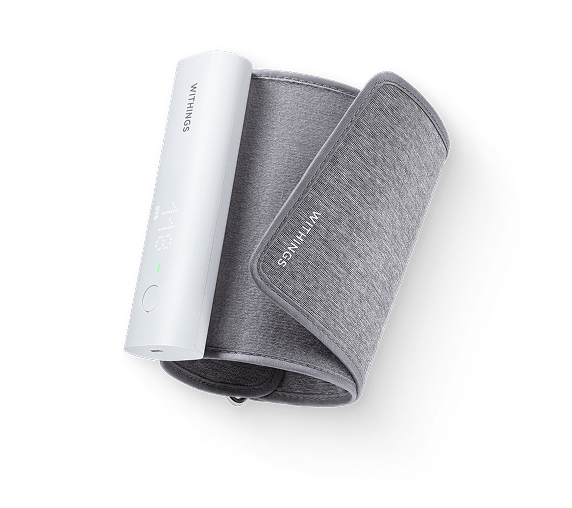
Validation status: Listed on the VDL as "Withings BPM Connect," home use, validated per ANSI/AAMI/ISO 81060-2:2013. Listed cuff: integrated 22–42 cm; VDL price band $$$. Also listed for pregnant populations.
Cuff-size note: Integrated cuff at 22–42 cm — one built-in cuff, so if your arm sits near either edge of that range, verify fit carefully or discuss sizing with your clinician.
Community-reported strengths: The app-and-sync category gets its praise from people who actually share data: PDF reports brought to appointments, trend graphs, and Apple Health integration. Withings' phone-app ecosystem is a known quantity for its scale and watch owners.
Community-reported complaints: The connected-device tradeoff applies here: app pairing and sync are the parts most likely to frustrate, and some users find pen-and-paper logging faster and more reliable than Bluetooth. When the app works, people love it; when it doesn't, it dominates the complaint profile.
Observed asking price: $129.95 at Best Buy (observed September 25, 2026 — asking price, not a sale).
A&D UA-767 series
Who it's for: A validated alternative worth knowing exists, especially if you've seen A&D equipment in a clinical setting.
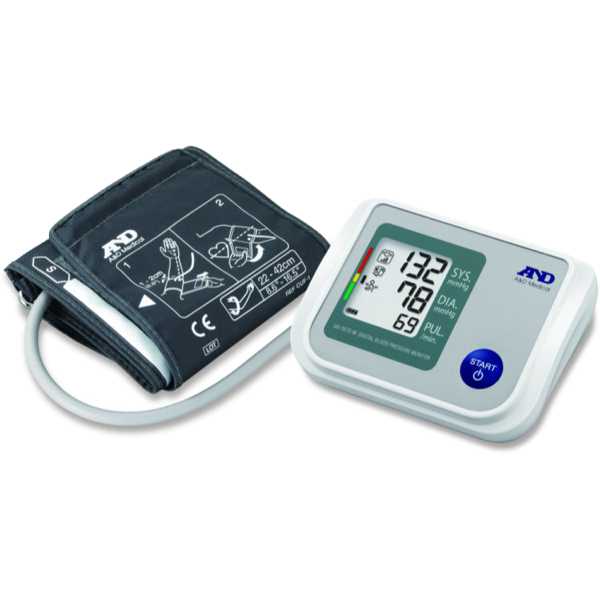
Validation status: Our research synthesis records the VDL listing as UA-767F. Our saved product image, however, is of the UA-767S — a different variant. We cannot confirm from our reads that the photographed variant is the listed one, so the photographed UA-767S-W remains unconfirmed. This draft does not establish validation for the series as a whole; check the exact model number against validatebp.org.
Cuff-size note: Not captured for the A&D variants in our reads — measure your arm and confirm the listed cuff range on the VDL entry.
Community-reported strengths: Thin community signal in our reads — no strong praise or complaint clusters surfaced, which is why this is a short entry rather than a lead pick.
Community-reported complaints: None specific surfaced in our reads.
Asking price: No asking price was captured in our research pass (2026-09-25).
Also considered
Omron 5 Series
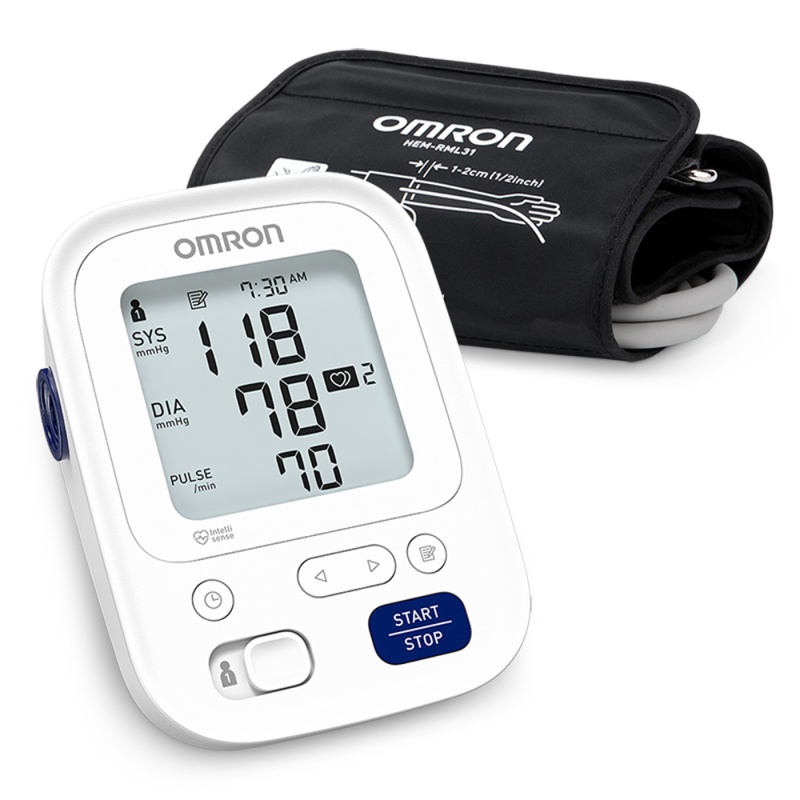
We have a product image for this model, but its VDL status was not confirmed in our reads. Because independent validation-list membership is our inclusion rule, it is not a pick. If it appears on the VDL when you check, that would change the picture — but we could not confirm it.
Validated alternatives, briefly
These appear on the VDL reads but had thin community signal and no owned images in our research, so we are not giving them full reviews — they are legitimate validated options, not rejects:
- Beurer Premium 800 and Beurer BM69 (VDL, ISO 81060-2:2018/AMD1:2020 and ANSI/AAMI/ISO 81060-2:2013 respectively)
- Homedics Premium Arm, 700 Series, and 900 Series (VDL; Premium Arm and 700 Series list an optional XL cuff, 43–56 cm — the only models in our reads offering that)
- Microlife BP B6 Connect, BP B3 Comfort PC, and WatchBP Home A BT (VDL; WatchBP Home A lists separate small/standard/large cuffs)
- Walgreens Premium Arm (VDL, ANSI/AAMI/ISO 81060-2:2013)
What we don't recommend, and why
Wrist monitors as your primary device
The American Heart Association's home-monitoring guidance recommends automatic cuff-style upper-arm monitors and says wrist and finger monitors are not recommended because their readings are less reliable. Community consensus leans the same way — with one fair dissent worth stating: some users measure more often with a wrist unit because it's easier (winter, travel, arthritis), and they argue consistent wrist readings beat rare arm readings. That compliance argument is real. But as your one device — the one whose numbers guide treatment decisions — the evidence base favors the upper arm.
Unvalidated cuffless devices
The 2025 ACC/AHA guideline update (reported via secondary summaries; underlying text not directly opened) advises against relying on cuffless devices, including smartwatches, for diagnosis or medication management until they demonstrate greater precision and reliability. Phone-camera apps claiming to measure blood pressure were the subject of an FDA consumer warning in September 2025 (secondary reporting), and the FTC settled deceptive-accuracy charges against an "Instant Blood Pressure" app in 2016. One exception carries partial evidence: the Aktiia bracelet is CE-marked with published validation, but it requires periodic cuff calibration and a clinician reviewer found it did not accurately track nighttime dips; U.S. availability is unverified. Not a recommendation.
Full claim-by-claim verdicts in our cuffless hype audit.
"Clinically validated" on the box
Treat this as marketing language, not evidence. FDA 510(k) clearance means a device is substantially equivalent to an already-cleared device — it is not an independent accuracy check. Check validatebp.org instead.
Source notes
- AMA U.S. Blood Pressure Validated Device Listing (validatebp.org), two brand-filtered print-view renders read directly 2026-09-25; VDL inclusion criteria PDF (Rev 1-2021), read directly 2026-09-25.
- AHA, "Home Blood Pressure Monitoring" (heart.org), read directly 2026-09-25.
- STRIDE BP principles page (stridebp.org), read directly 2026-09-25; live device list inaccessible (HTTP 500, three attempts, 2026-09-25).
- Medaval, "BPMs recommended by Stride BP — 03 July 2026" (secondary rendering), read 2026-09-25.
- CDC, "Self-Measured Blood Pressure Monitoring: Action Steps for Clinicians" (stacks.cdc.gov, 2014), read directly 2026-09-25.
- Community reads 2026-09-25: diabetes.co.uk forum; rapamycin.news forum; Mayo Clinic Connect; Badger & Blade forum; MacRumors forums; sentiHub Omron M3 Comfort aggregation; The Skeptical Cardiologist Aktiia review (Apr 2023); smartbp.app phone-camera myth article; Medium/Prashant Thakur (Mar 2026); offkeytikki.com Omron rankings (Sept 2026).
- STAT, "Be careful with at-home blood pressure machines" (Aug 15, 2023), read directly — source of the Hopkins trial figures cited in our guide.
- classaction.org, Omron Platinum BP5450 proposed class action (~2023), read directly — allegations only, outcome unknown.
- FDA warning on unreviewed BP devices (Sept 2025): secondary reporting via fiercebiotech.com; FTC 2016 "Instant Blood Pressure" app settlement: enforcement coverage reads.
- 2025 ACC/AHA guideline: secondary summaries only; full text not opened.
- Asking prices: Meta product catalog observations, 2026-09-25; not live retailer-page reads, not sales, exclude tax/shipping.
Limitations
- The complete unfiltered VDL was not captured; additional validated home models may exist beyond what we directly read, plus nine models seen only in crawl snippets.
- STRIDE BP and BIHS live lists were inaccessible; no confirmations from either in this run.
- Several picks have no asking price captured; none of the prices are verified sales.
- Community evidence is forum/review-aggregate material — useful for usability patterns, not for accuracy claims.
Consult your clinician. This is informational research, not medical advice. Before acting on home readings, have your clinician verify you're using the monitor correctly and that it agrees with office equipment — the VDL itself advises bringing your device to an appointment for comparison, and the AHA recommends an annual check. Talk to your healthcare professional about how often to measure and what your readings mean.